 Pediatric Dentistry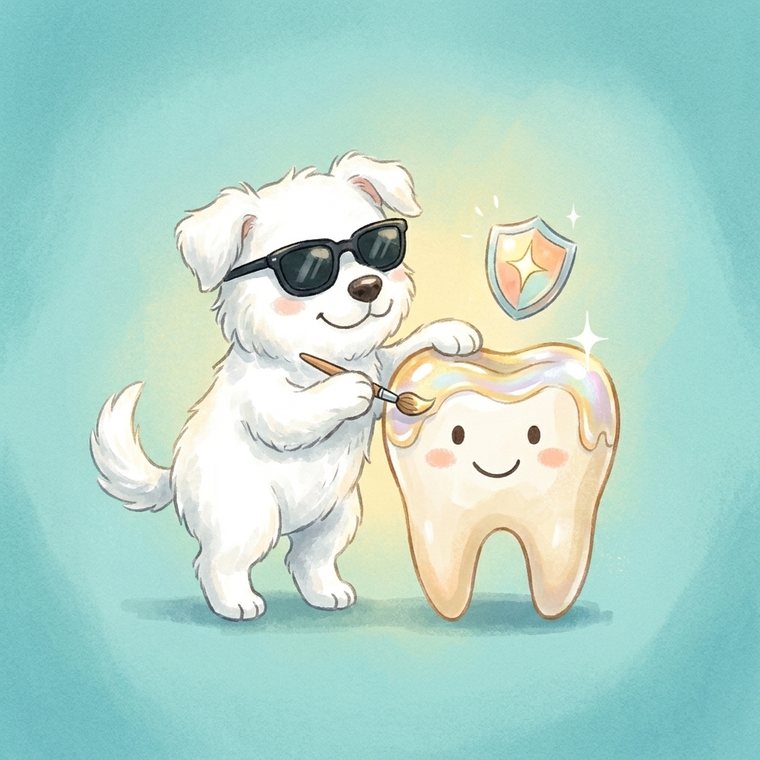
Where cavities actually start
Run a fingertip across the chewing surface of a back molar and you can feel the landscape: ridges, valleys, and narrow crevices. Those crevices, called pits and fissures, are what make a molar good at grinding food. They are also the spots where cavities start most often in a child's mouth.
The trouble is scale. Many groove openings are narrower than a single toothbrush bristle and deeper than they look. A brush sweeps across the top of the canyon while plaque and food particles stay down in the bottom of it. A child can brush faithfully, twice a day, every day, and still end up with a cavity in exactly that spot.
That is not a parenting failure. It is geometry. And it is the reason sealants exist: fill in the canyon, and there is nothing left to hide in.
What a sealant is, in plain terms
A dental sealant is a thin coating painted into the grooves of a chewing surface and hardened in place. Nothing gets drilled. Nothing gets removed. The tooth keeps its shape and its enamel, and a rough, deep surface becomes a smooth one that a toothbrush can genuinely clean.
Which teeth are worth sealing is a decision made at the exam, tooth by tooth, based on how deep the grooves run and how your child's teeth have been doing so far. In general, your pediatric dentist is looking at:
- Permanent back molars, the most common place a sealant goes
- Premolars, when their grooves are deep enough to trap plaque
- Any chewing surface whose grooves are too narrow to keep clean with a brush alone
A sealant is one layer of protection, not the whole roof. It sits alongside cleanings, fluoride, and daily brushing rather than replacing any of them, and you can see how the full preventative picture fits together across our pediatric dental services.
Sorting myth from fact
Myth: once the sealants are on, brushing matters less
This is the one we most want to head off. A sealant covers a single surface: the chewing top of a back tooth.
Fact: a sealant protects one surface, and only that one
The sides of the teeth, the tight spaces between them, and the gumline are all still uncovered, and plaque still collects there. Brushing twice a day and cleaning between the teeth matter exactly as much the week after sealants as the week before.
Myth: sealants are for teeth that already have a problem
Plenty of parents assume a sealant is a repair, something you do after a cavity turns up at a checkup.
Fact: sealants go on healthy teeth, on purpose
A sealant is preventative. It works by covering a groove before decay gets started, which is why the conversation usually comes up soon after a new molar has finished coming in. If decay is already there, that is a different conversation about a filling, and your pediatric dentist will walk you through it first.
Myth: baby molars are not worth sealing since they fall out anyway
On paper, baby molars look temporary. In practice, they stay in the mouth through years of school lunches.
Fact: it is decided tooth by tooth
Baby molars chew hard, and they hold space for the permanent teeth lining up behind them. Whether one gets sealed depends on the depth of its grooves and your child's history, which is a judgment your pediatric dentist makes at the exam and explains to you before anything happens.
Booking is one quick call.
One number reaches both offices, Monday to Friday 8 to 5. Your child's health details stay in a conversation with our front desk, never typed into a website.
The BPA question, answered plainly
Parents ask about materials, and that is a fair thing to ask about anything going into a child's mouth. The dental sealants we use are BPA-free.
We are not going to hand you sweeping reassurances about dental materials in general, because that is not how honest health information works. What we can do is tell you exactly what we use, show it to you at the chair, and answer whatever comes next. If you would rather talk it through before the appointment, call and ask: (239) 482-2722.
If your family avoids particular materials for medical reasons, mention it to the front desk when you book. It goes in your child's chart, and the team knows before you walk in.
What getting a sealant is actually like
Short and undramatic. There is no drilling and no numbing needed for a routine sealant on a healthy groove, and nothing sharp is involved. Here is the whole sequence:
- The chewing surface is cleaned and dried.
- A conditioning gel goes on for a few seconds, then rinses away. Some children mention a slightly sour taste.
- The sealant is painted into the grooves with a small brush.
- A blue curing light hardens it, usually in seconds.
- Your child bites down on a strip of colored paper so we can confirm the bite still feels normal.
Start to finish, it takes a few minutes per tooth, and it is often handled at the same appointment as a cleaning so you are not making a separate trip. Your child can usually eat and drink right afterward.
Honestly, the hardest part is holding still with an open mouth, which gets easier when there is a sixteen-foot whale shark or a shipwreck overhead to stare at. If your child is uneasy about anything new, tell us when you book. Some families read The Bravest Little Diver the night before and arrive with a plan.
Checked at every checkup, touched up as needed
A sealant lives on a surface that grinds through every meal for years. It can wear thin at the edges or chip, and when that happens it needs a look rather than an assumption. We are not going to put a number of years on a sealant, because the real answer depends on your child's bite, grinding habits, and diet.
So we look. At every checkup, each sealed surface gets inspected along with everything else, and anything worn or chipped is touched up or replaced. That is the entire maintenance plan: check it regularly, fix it early, keep the groove covered.
It is one more reason regular visits matter. The American Academy of Pediatric Dentistry recommends a dental checkup roughly every six months for most children, and your pediatric dentist may suggest a different interval based on your child's needs. Those appointments are where sealants get checked, fluoride gets applied, and small problems get caught while they are still small. Our page on cleanings and exams covers what a routine visit includes.
Wondering whether your child's molars are ready? Ask at the next checkup, or bring it up when you book. One number reaches both the Fort Myers and Naples offices, Monday to Friday, 8 to 5, and a real human answers: (239) 482-2722.
Parents ask us
At what age do children usually get sealants?
It depends on when the teeth arrive, not on a birthday. Permanent molars come in around age six and again around age twelve, and a sealant is typically considered once the chewing surface is fully in. The American Dental Association describes sealants as a protective coating for the chewing surfaces of back teeth. Your pediatric dentist will tell you which of your child's teeth are ready.
What does my child actually feel while a sealant goes on?
A routine sealant on a healthy tooth involves no drilling and no numbing. The surface is cleaned and dried, a conditioning gel goes on and rinses off, the coating is painted into the grooves, and a light hardens it. The most noticeable part for most children is a slightly sour taste from the gel. The rest is mostly sitting still for a few minutes.
Are your sealants BPA-free?
Yes. The dental sealants we use are BPA-free. If you have questions about any material we use on your child, ask at the appointment, or mention it when you book so it is noted in the chart ahead of time. One number reaches both offices, Monday to Friday, 8 to 5: (239) 482-2722.
How long do sealants last?
Longer for some children than others, which is why we check them instead of predicting. A sealant absorbs real chewing force every day and can wear at the edges or chip. At each checkup, your pediatric dentist inspects every sealed surface and touches up or replaces whatever needs it. We would rather look at the actual tooth than quote you a number of years.
If my child has sealants, do we still need fluoride and flossing?
Yes to both. A sealant protects the chewing surface of one tooth. It does nothing for the spaces between teeth, the gumline, or the smooth outer surfaces, and those are precisely where brushing, cleaning between the teeth, and fluoride do their work. Think of sealants as one layer of protection rather than the whole roof.
Ready to set sail?
A real human answers, Monday to Friday 8 am to 5 pm. New patient forms arrive ahead of time, no clipboard scramble.
Call (239) 482-2722